
Search


- Categories
-
Hammered Bar & Tubing
-
Balusters & Pickets
-
Forged Steel Scrolls and Panels
-
Ornamental Wrought Iron
-
Ornamental Cast Aluminum
-
Hardware & Supplies
-
Security Screen Doors
- Custom Services - Build to Order
-
-
-


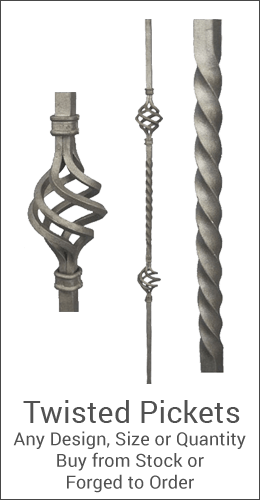
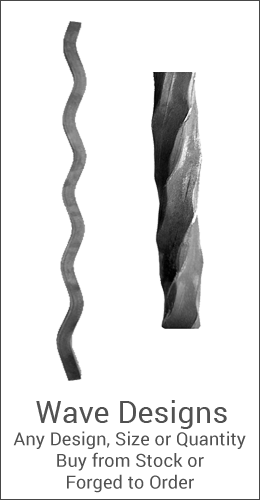
Balusters & Pickets
Popular Questions with Answers
-
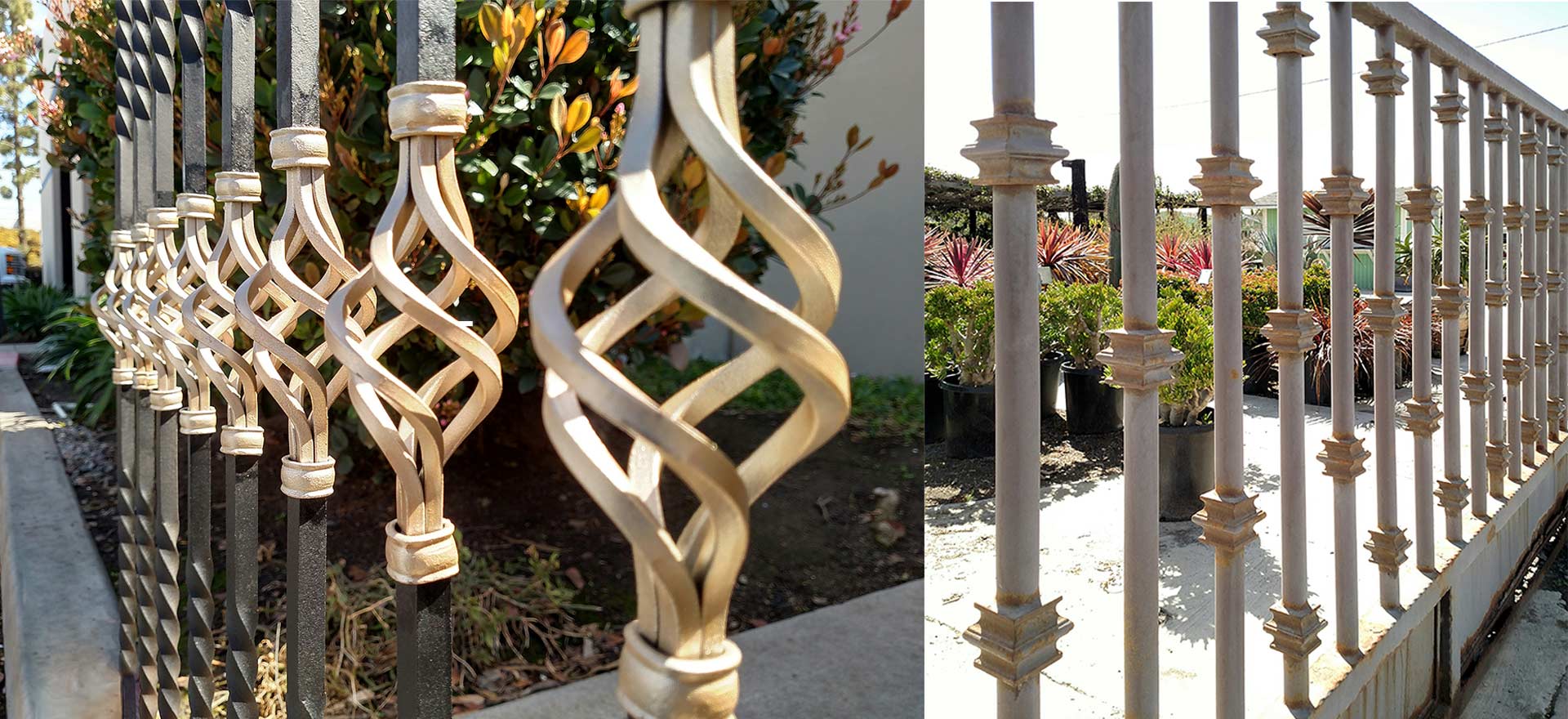
The terms are often used interchangeably, but there are subtle distinctions. A baluster is a vertical support member in a railing system, connecting the top rail to the bottom rail or floor surface. A picket is typically a flat or square bar version, commonly used in fence panels. Spindle is a general term, usually referring to turned or shaped vertical members. In ornamental iron work, all three styles serve the same structural and decorative purpose.
-
The International Residential Code (IRC) requires that gaps between balusters must not allow a 4-inch sphere to pass through. On stair railings, because of the angle, the maximum opening is 4-3/8 inches. A practical rule of thumb is to place approximately three balusters per linear foot of railing to comfortably meet this requirement. Always confirm with your local building department, as some jurisdictions adopt amendments to the model code.
-
Solid steel balusters are well suited for both interior and exterior installations. For outdoor use, a quality powder coat finish is essential to protect against moisture and rust. Hollow balusters can be used outdoors when they are welded to metal top and bottom rails, which seals the interior from moisture accumulation. If hollow balusters will be used outdoors with non-welded connections, moisture can enter the tube and cause rust from the inside out — solid balusters are the safer choice in that scenario.
-
Solid balusters are forged from mild steel and offer a slightly textured, old-world surface. They are more intricate in the designs they can hold, perform better outdoors, and have no flex. Hollow balusters are fabricated from higher-grade steel tubing, have a smooth surface, and are lighter — making them easier to cut, handle, and ship. Both meet building code strength requirements. Hollow balusters have become the industry standard for production work due to cost and ease of installation; solid is preferred for exterior, high-detail, or restoration projects.
-
Yes. Ornamental iron balusters are sold in standard lengths and are designed to be cut down on the job site to match your specific rail height. Hollow balusters can be cut with a hacksaw or angle grinder with a metal cutting wheel. Solid balusters require a chop saw with a metal-cutting blade. Always cut from the bottom of the baluster to preserve the decorative top detail.
-
Yes. Superior Ornamental Supply serves both retail customers and wholesale trade accounts including ironworkers, welders, fence contractors, and fabricators. Contact us at (888) 525-1280 or info@superiorornamentalsupply.com for volume pricing information.